
Peripheral Artery
Disease (PAD)
PAD Guide Sections
Experiencing Leg Pain or Cramping While Walking?
Book EvaluationExperiencing Leg Pain or Cramping While Walking?
Understanding Peripheral Artery Disease
Peripheral artery disease (PAD) is more than a circulation problem in the legs—it is a manifestation of systemic atherosclerosis. The same disease process that affects the arteries of the legs can also affect the heart and brain, which is why PAD is an important marker of overall cardiovascular risk.
Progressive PAD can reduce walking ability, physical activity, strength, and mobility, sometimes leading to significant disability.
Advanced PAD can threaten the limb. Severe disease may cause rest pain, nonhealing wounds, ulcers, or gangrene and can ultimately result in amputation.
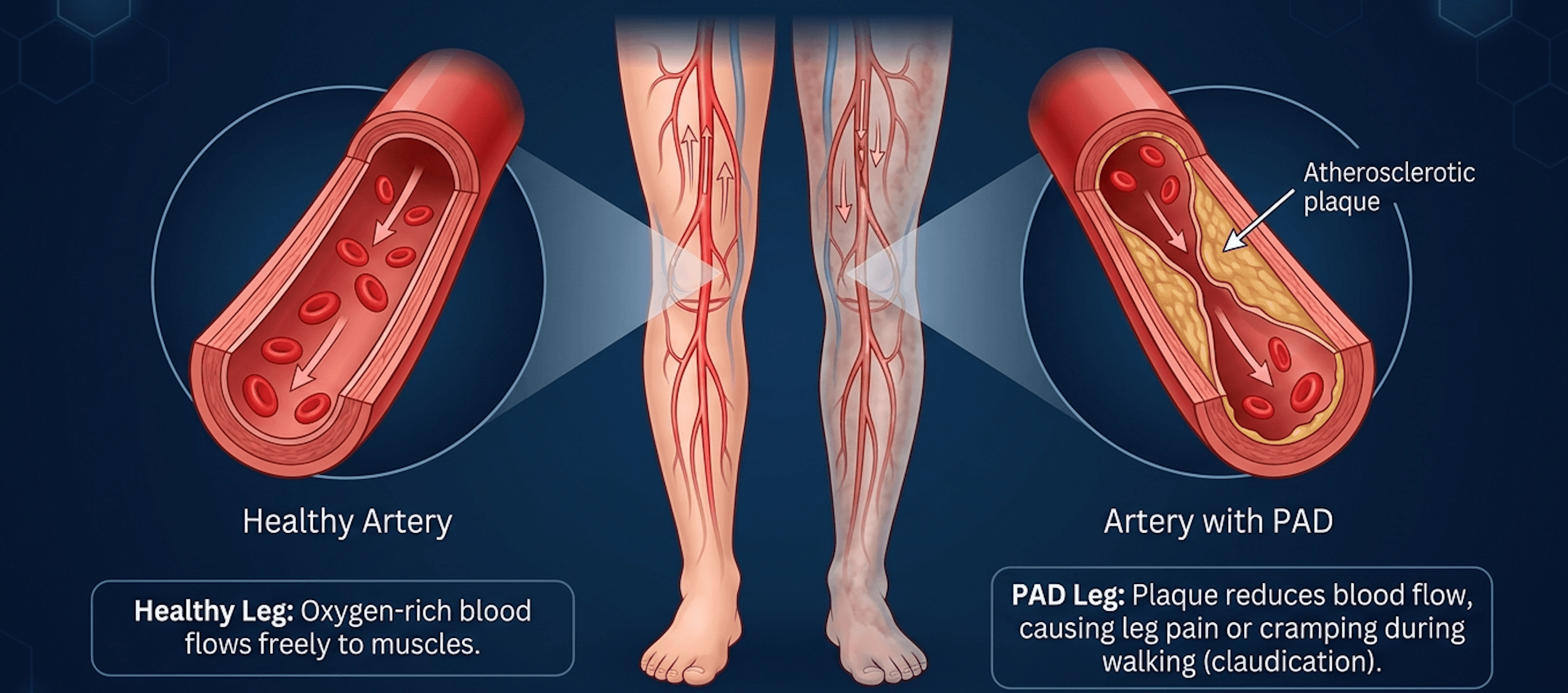
Symptoms of PAD
Intermittent Claudication
Painful leg muscle cramping in calves or thighs while walking or climbing stairs that subsides with a few minutes of rest.
Coldness in Lower Leg or Foot
Distinct temperature difference where one leg or foot feels significantly colder than the other due to poor arterial supply.
Slow-Healing Foot Ulcers
Sores or wounds on toes, feet, or ankles that heal very slowly or fail to heal over weeks.
Hair Loss & Shiny Leg Skin
Loss of hair on toes and lower legs along with smooth, shiny, or pale/bluish skin changes.
Weak or Absent Leg Pulses
Diminished femoral, popliteal, or pedal pulses detected by a cardiologist during physical exam.
Ischemic Rest Pain
Severe burning foot pain occurring at night while lying flat, relieved by dangling the leg over the bed edge.
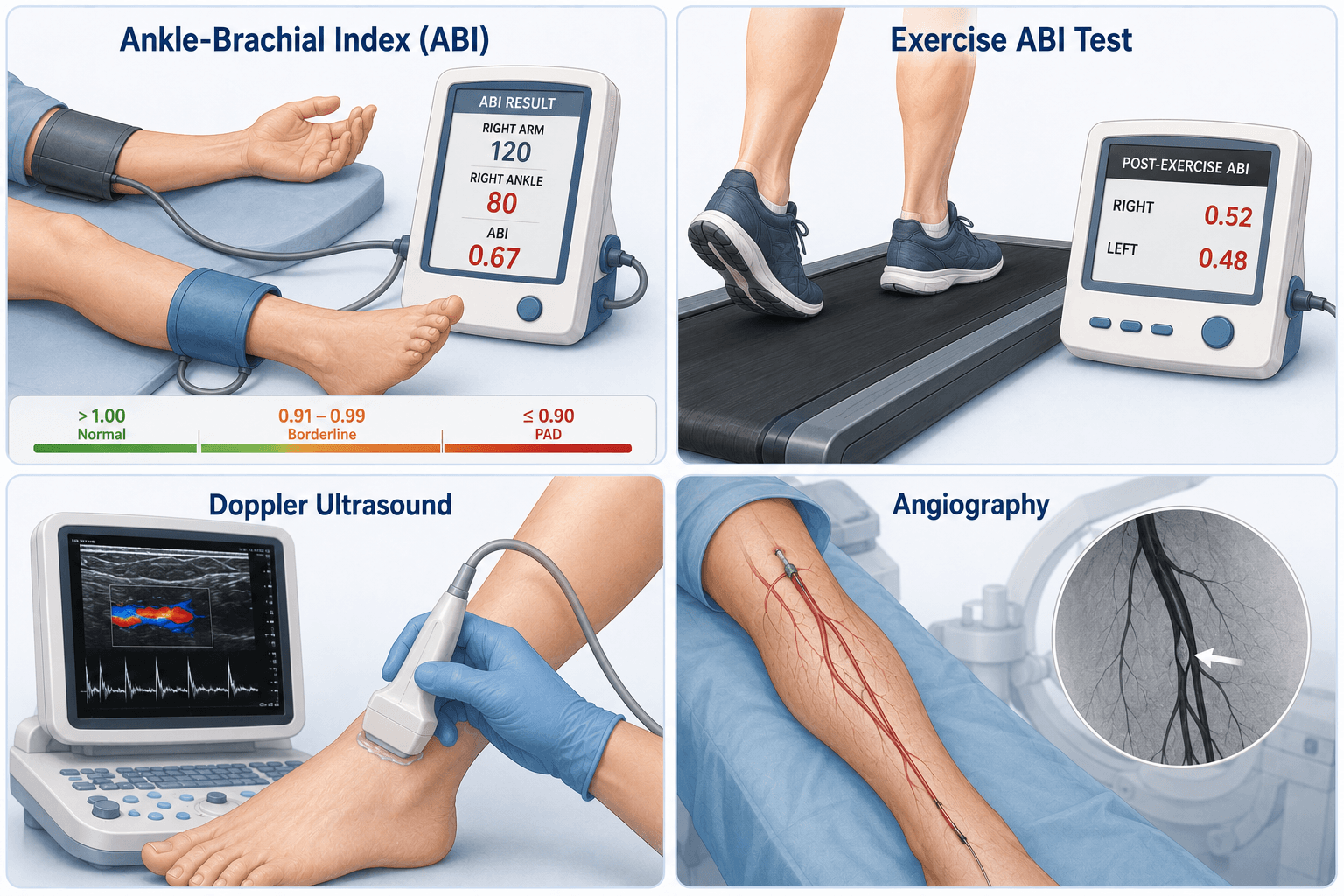
Diagnosis
Ankle-Brachial Index (ABI)
Compares blood pressure readings between your ankles and arms; a score below 0.9 points to PAD.
Exercise ABI Test
Measures blood pressure changes before and after walking on a treadmill.
Doppler Ultrasound
Uses sound waves to view blood flow and spot blocked vessels.
Angiography
Uses specialized imaging and contrast dye to map out exact blockages in the arteries.
Treatment
Treatment for peripheral artery disease (PAD) focuses on improving blood flow, relieving symptoms, protecting your legs, and reducing the risk of heart attack and stroke. The right approach depends on the severity of the disease, your symptoms, and your overall health.
Supervised Exercise Therapy (SET)
Structured treadmill walking program to build collateral blood vessel pathways and increase pain-free walking distance.
Endovascular Balloon Angioplasty
A tiny catheter with a balloon tip is navigated to the blocked leg artery and inflated to push plaque against arterial walls.
Atherectomy
Advanced catheter-based devices that gently shave, debulk, or vaporize hardened plaque blockages directly from the arterial wall.
Lithotripsy
Uses localized sonic pressure waves (intravascular lithotripsy) to crack and modify tough, deeply calcified arterial blockages before ballooning or stenting.
Peripheral Arterial Stenting
Placement of a metallic mesh stent to scaffold narrowed leg arteries open and ensure durable long-term blood flow.
Our goal is to choose the least invasive treatment that can safely improve your circulation and help you stay active.