Congestive Heart
Failure (CHF)
CHF Guide Outline
Experiencing Shortness of Breath or Leg Swelling?
Book EvaluationExperiencing Shortness of Breath or Leg Swelling?
What is Congestive Heart Failure?
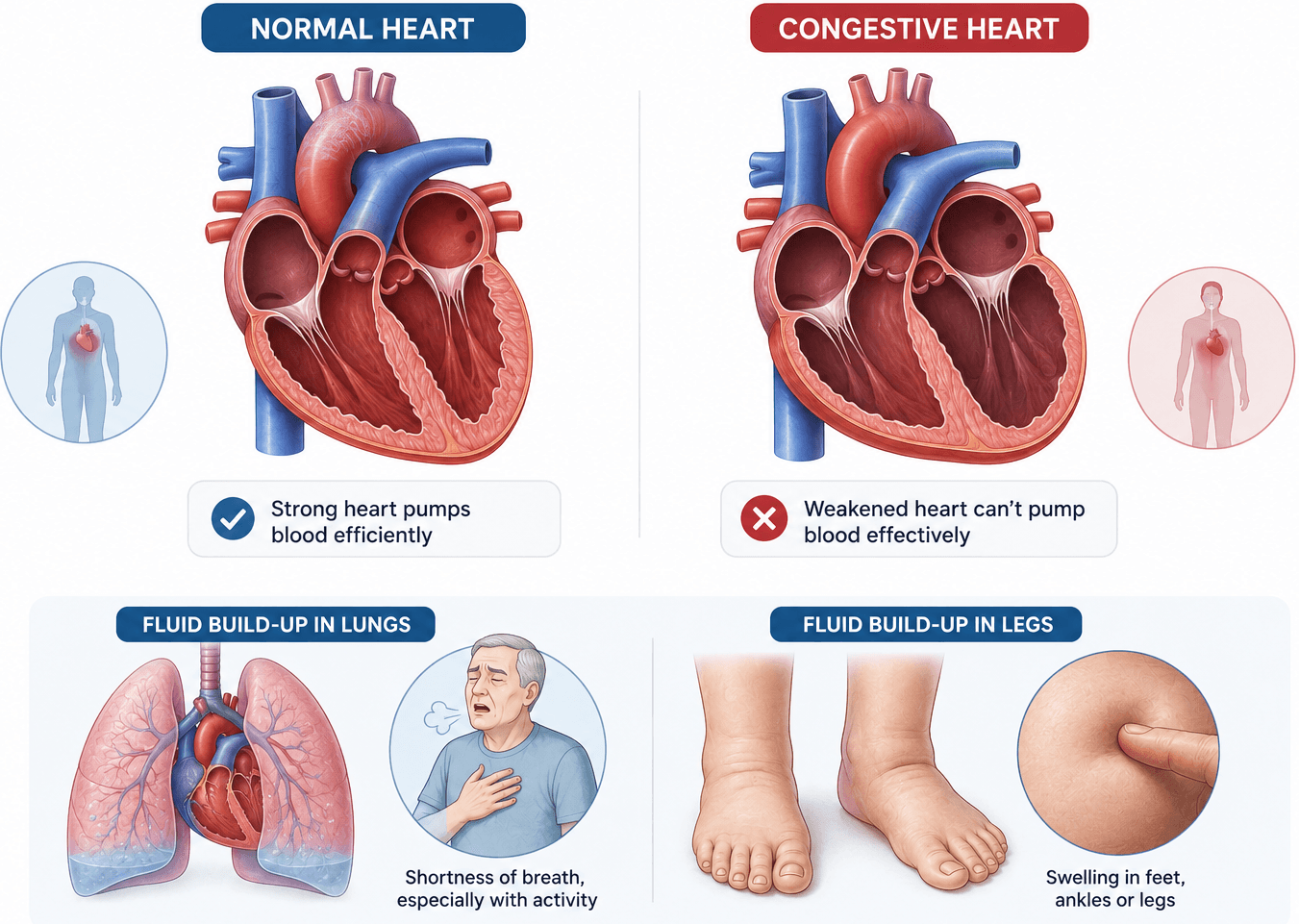
Heart failure is not simply a “weak heart.” It is a complex, chronic condition in which the heart cannot adequately meet the body’s needs, and it can occur even when the heart’s pumping strength appears normal.
Heart failure can affect the left side, right side, or both sides of the heart. When the heart cannot pump or fill effectively, blood can back up into the lungs or the rest of the body. This can cause fluid to build up in the lungs, legs, and other organs - resulting in congestion, shortness of breath, and fatigue.
Types of Heart Failure
Left-Sided Heart Failure
Fluid backs up into the lungs, causing shortness of breath. This is the most common form.
Right-Sided Heart Failure
The right side struggles to pump blood to the lungs, causing fluid to back up in the body and lead to swollen feet, legs, or belly.
Congestive Heart Failure (CHF)
A general term used when fluid builds up in the body's tissues and organs because the heart does not pump efficiently.
Symptoms of Heart Failure
Shortness of Breath (Dyspnea)
Breathlessness during routine exertion, lying flat (orthopnea), or waking up gasping at night.
Fluid Retention & Edema
Rapid weight gain, leg/ankle swelling, and abdominal bloating due to fluid accumulation.
Profound Fatigue & Weakness
Constant tiredness caused by reduced cardiac output and tissue oxygen delivery.
Persistent Coughing & Wheezing
Cough producing white or pink blood-tinged phlegm caused by pulmonary congestion.
Symptoms can be subtle and progressive. Fatigue, reduced exercise capacity, shortness of breath, swelling, or difficulty lying flat may gradually develop and be mistaken for aging or being out of shape.
Diagnostic Tests
The underlying cause matters. Coronary disease, hypertension, valve disease, arrhythmias, cardiomyopathies, diabetes, and other conditions can contribute to heart failure and often need to be addressed directly.
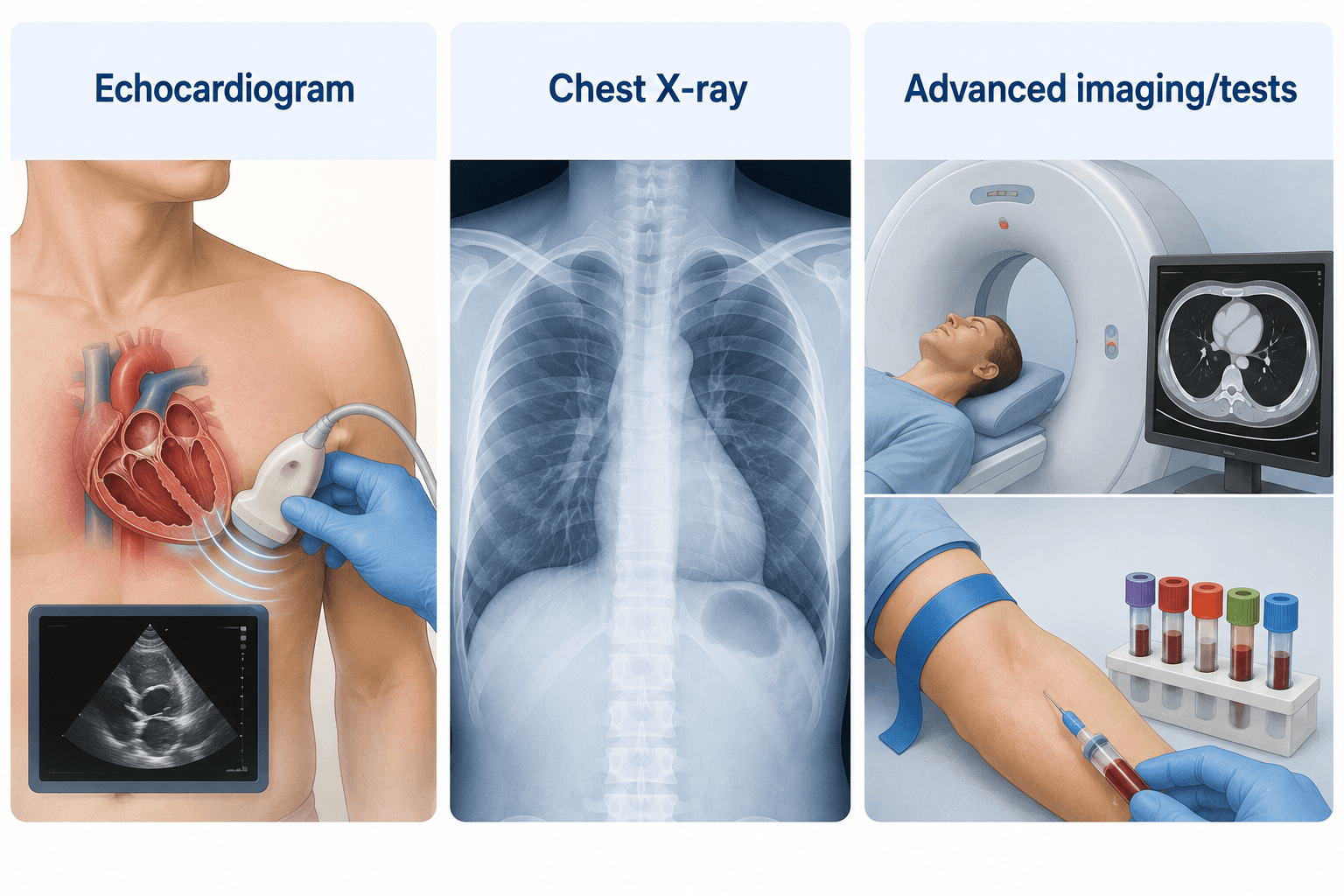
Echocardiogram
Uses sound waves to view heart valves and measure the ejection fraction (pumping percentage).
Chest X-ray
Reveals heart enlargement or fluid buildup in the lungs.
Advanced imaging/tests
Stress tests, cardiac CT, or an MRI provide detailed views of heart structure and blood flow.
Treatment
GDMT (Guideline-Directed Medical Therapy)
Foundational evidence-based medical therapy (including ARNIs, beta-blockers, MRAs, and SGLT2 inhibitors) designed to improve heart function, reduce hospitalizations, and prolong survival.
Monitoring Devices (CardioMEMS)
A miniature wireless sensor implanted in the pulmonary artery that measures daily pulmonary artery pressures from home, allowing proactive medication adjustments before symptoms develop.
Cardiac Modulation Therapy
Innovative device therapy (Cardiac Contractility Modulation / CCM) that delivers precisely timed electrical signals during the heart muscle's refractory period to improve contraction strength.
BiV, Pacemaker / ICD
Implantable cardiac devices including Biventricular pacemakers (Cardiac Resynchronization Therapy / CRT) to synchronize ventricular pumping, and Implantable Cardioverter-Defibrillators (ICD) to protect against dangerous arrhythmias.
Heart failure is a long-term journey, but you don’t have to manage it alone. Your medications, lifestyle, regular monitoring, treatment of the underlying cause, and follow-up with us all work together to help you stay stable, active, and well.
Our goal is not only to relieve symptoms such as breathlessness or swelling, but to understand why your heart is struggling, optimize your treatment early, monitor your progress, and adjust your care when needed—so you can feel better, stay active, and maintain the best possible quality of life.