
Arrhythmias &
Atrial Fibrillation
Arrhythmia Guide Outline
Experiencing Palpitations or Irregular Heartbeats?
Book EvaluationExperiencing Palpitations or Irregular Heartbeats?
What are Cardiac Arrhythmias?
Arrhythmias are disorders of the heart’s electrical system that can cause slow, fast, or irregular heartbeats. They range from harmless to potentially serious conditions.
Importantly, symptoms do not always reflect the severity of an arrhythmia. A serious arrhythmia may cause only mild symptoms, while a less serious rhythm disturbance may feel very noticeable or uncomfortable.
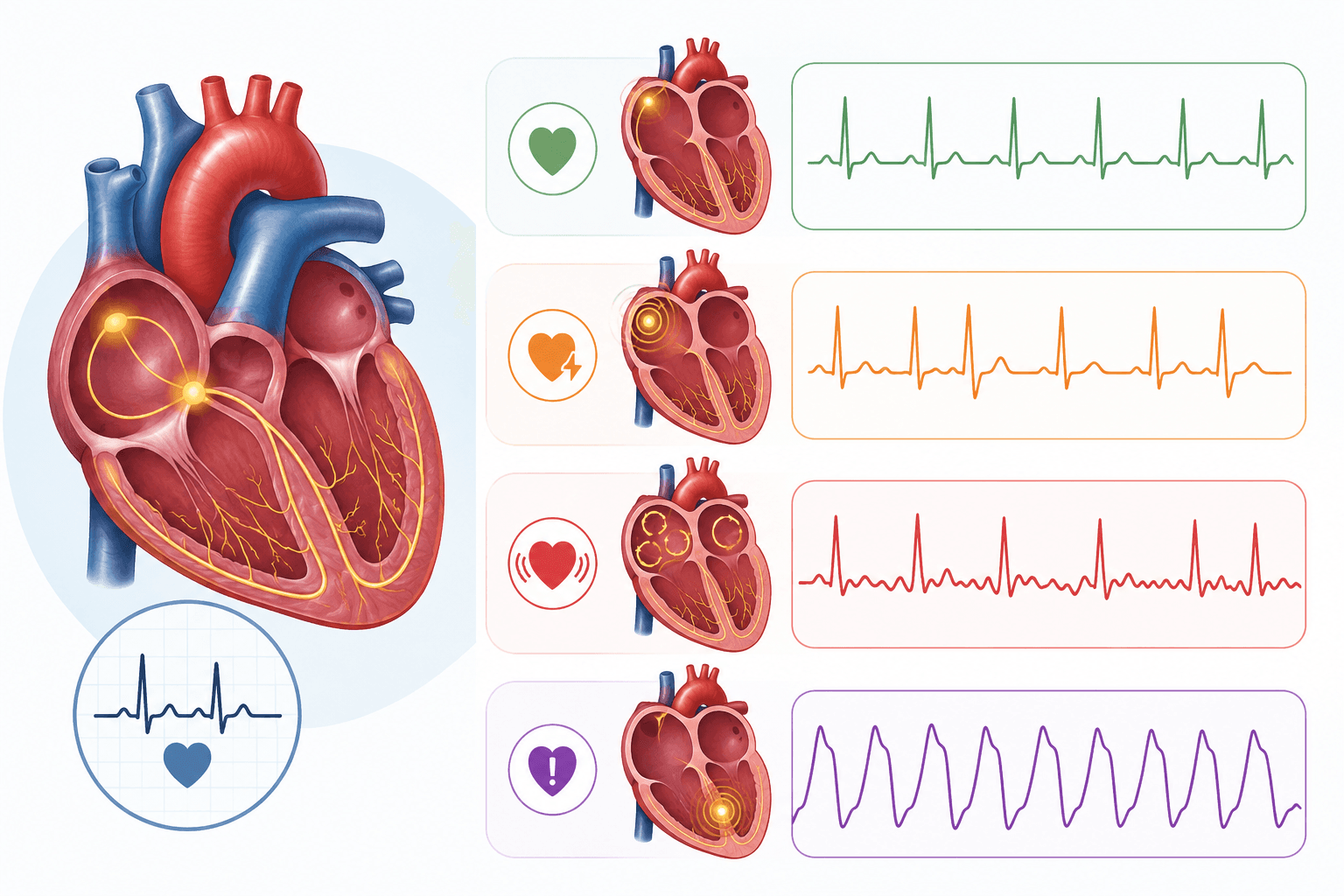
Types of Cardiac Arrhythmias
Fast Heart Rhythms
Tachyarrhythmias
Supraventricular tachycardia · Atrial tachycardia · Atrial flutter · Ventricular tachycardia
Slow Heart Rhythms
Bradyarrhythmias
Sinus bradycardia · Sinus node dysfunction · Heart block
Irregular Heart Rhythms
Irregular rhythms
Atrial fibrillation · Premature atrial contractions · Premature ventricular contractions
Some arrhythmias, like atrial fibrillation, increase stroke risk and require more than just heart rate control.
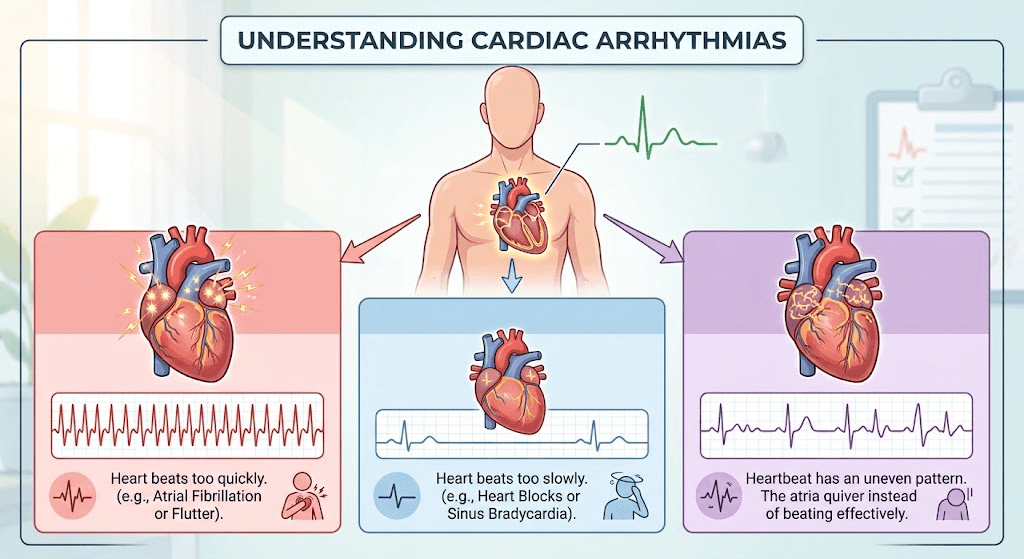
What might you notice?
Fainting Spells (Syncope)
Sudden temporary loss of consciousness due to profound electrical pauses (complete heart block) or rapid rhythms.
Shortness of Breath
Dyspnea occurring during irregular rapid rhythms when heart pumping efficiency drops significantly.
Chest Tightness or Discomfort
Chest pressure or tightening occurring during rapid ventricular rhythms from reduced coronary filling time.
Fatigue & Exercise Intolerance
Overwhelming tiredness during activity due to irregular or insufficient cardiac output from sustained arrhythmias.
Arrhythmias can be intermittent and hard to detect, sometimes requiring extended monitoring.
Symptoms don’t always match severity—serious arrhythmias may feel mild, and benign ones may feel intense.
Diagnostic Tests
Depending on the symptoms and suspected rhythm problem, extended heart-rhythm monitoring may be necessary.
Holter Monitor
A portable ECG device worn for 24 hours or longer during daily routines.
Event Recorder
A wearable monitor used for up to 30 days, activated when you feel symptoms.
Echocardiogram
An ultrasound test that uses sound waves to check heart structure, valves, and blood flow.
Implantable Loop Recorder (ILR)
A small insertable device placed under the skin to continuously monitor and record heart rhythm for up to 3 years.
Electrophysiology Study (EPS)
A hospital procedure using thin tubes threaded into the heart to map abnormal electrical signals.
Wearable technology can help detection, but results must be interpreted carefully.
Treatment
Treatment is individualized and depends on the type of arrhythmia, its cause, symptoms, associated conditions, and overall risk.
Treatment may range from observation and monitoring to:
Some cases can be significantly improved or resolved with procedures, reducing long-term medication needs.
Treatment includes but not limited to
Antiarrhythmic Medication Therapy
Rate-control (beta-blockers, calcium channel blockers) or rhythm-control medications (flecainide, amiodarone, sotalol) to stabilize heart electrical signals.
Catheter Ablation
Minimally invasive catheter procedure that delivers thermal energy to scar tiny areas of heart tissue causing abnormal signals. Gold standard for SVT and AFib.
Left Atrial Appendage Closure (LAAC)
A minimally invasive catheter-based procedure that seals off the left atrial appendage to reduce stroke risk in patients with atrial fibrillation.