
Coronary Artery
Disease (CAD)
CAD Guide Outline
Experiencing Chest Pain or Pressure?
Book EvaluationExperiencing Chest Pain or Pressure?
What is Coronary Artery Disease?
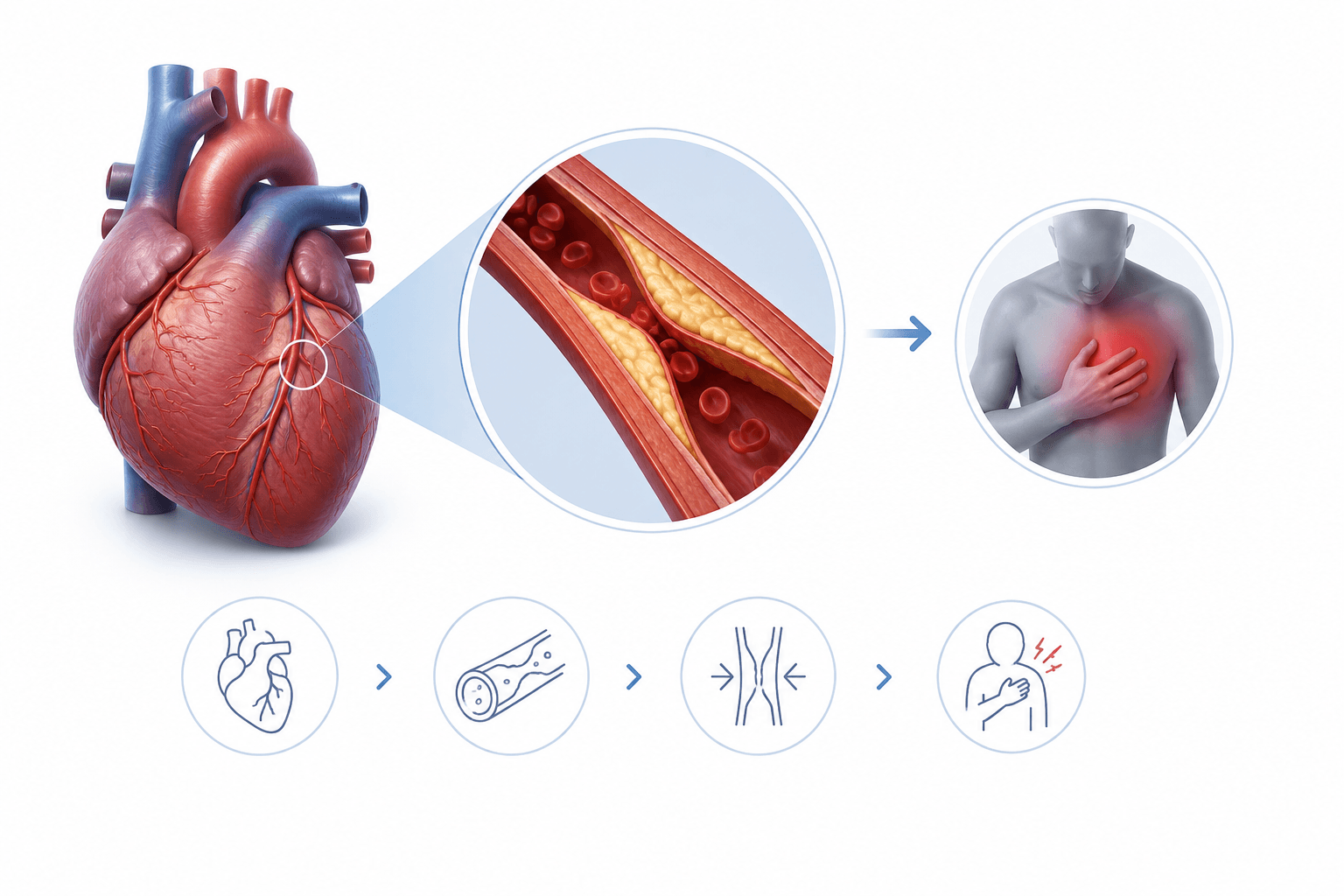
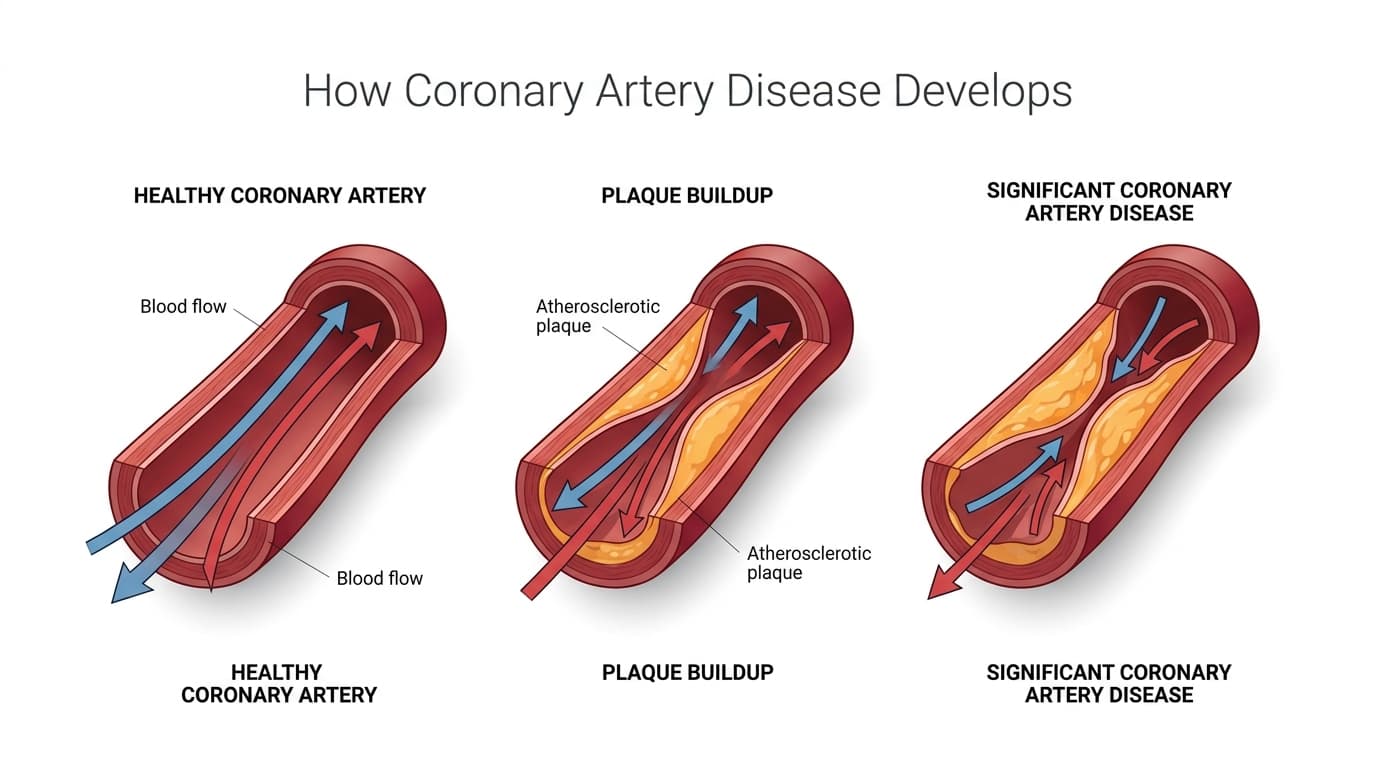
Coronary artery disease is a lifelong condition caused by atherosclerosis, where plaque builds up in the heart’s arteries. It is not just about “blockages,” but about an active disease process that can progress or suddenly rupture and cause a heart attack.
The severity of a blockage alone does not fully define risk, since heart attacks can occur even with moderate disease.
Classifications & Types of CAD
Obstructive CAD
Plaque significantly narrows a coronary artery and can restrict blood flow.
Non-obstructive CAD
Symptoms or disease may occur despite no major blockage in the large coronary arteries.
Chronic CAD
Long-standing disease that may cause predictable symptoms, particularly with exertion.
Acute Coronary Syndrome
Sudden reduction in coronary blood flow, including unstable angina and heart attacks.
Symptoms of Coronary Disease
Chest Pain or Discomfort (Angina)
Pressure, squeezing, fullness, or burning sensation in the center of chest during exertion or emotional stress.
Shortness of Breath (Dyspnea)
Inability to catch your breath during mild physical activity when heart muscle is starved of oxygen.
Radiation to Arm, Neck or Jaw
Radiating discomfort extending into the left shoulder, left arm, neck, jaw, or upper back.
Extreme Fatigue & Weakness
Unusual, overwhelming tiredness during routine tasks caused by decreased cardiac output.
Cold Sweats & Lightheadedness
Sudden diaphoresis (cold sweating), nausea, or dizziness accompanying chest pressure.
Heart Palpitations
Sensation of rapid, thumping, or irregular heartbeats triggered by myocardial ischemia.
Risk Factors & Prevention
Understanding what drives plaque progression and taking proactive steps allows for significant risk reduction and long-term cardiovascular health preservation.
- High blood pressure
- Family history
- Diabetes
- Smoking
- High cholesterol
- Overweight / obesity
- Physical inactivity
- Increasing age
- Don't smoke
- Eat a heart-healthy diet
- Exercise regularly
- Maintain a healthy weight
- Take prescribed medications
- Monitor BP, cholesterol & glucose
Diagnostic Tests
Finding the right answers starts with understanding your heart. We use a range of tests and procedures to see how your heart is working and check for problems with your coronary arteries. We’ll explain what to expect at every step.
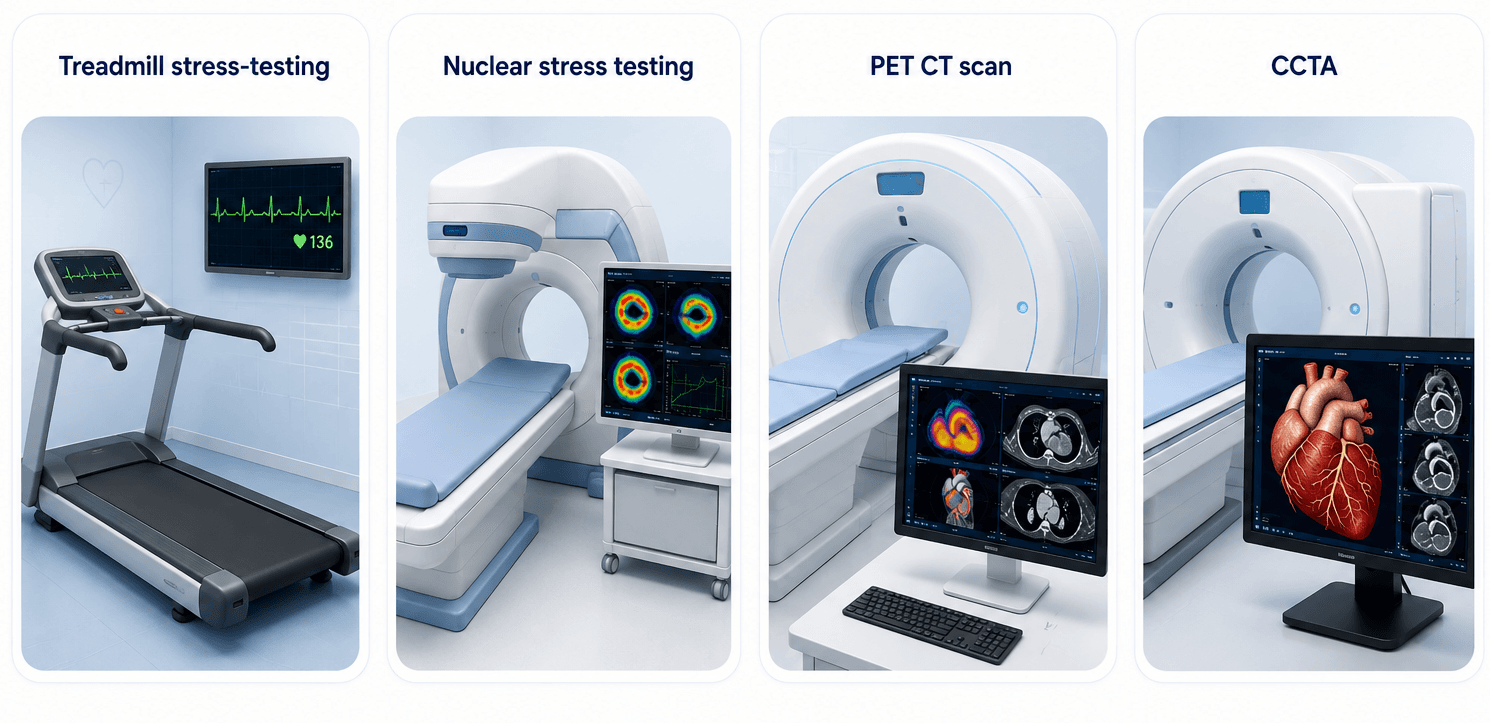
Treadmill stress-testing
Evaluates heart rhythm, exercise tolerance, and blood flow response under physical stress.
Nuclear stress testing
Uses specialized tracers to assess myocardial perfusion and detect areas of reduced blood supply.
PET CT scan
Advanced high-precision metabolic imaging for detailed evaluation of myocardial blood flow and viability.
CCTA (Coronary CT Angiography)
Non-invasive high-resolution 3D imaging visualizing coronary artery anatomy and plaque narrowing.
Treatment & Procedures
Treatment is not always a stent or surgery; many patients benefit most from medical therapy and aggressive risk-factor control, including cholesterol, blood pressure, diabetes, smoking, and lifestyle management. Procedures are reserved for selected cases based on symptoms, anatomy, and overall risk.
Optimal Medical Therapy (OMT)
Guideline-directed medical management using Dual Antiplatelet Therapy (DAPT), high-intensity statins, beta-blockers, and ACE-inhibitors.
Percutaneous Coronary Intervention (PCI / Stenting)
Minimally invasive catheterization where a tiny balloon dilates blocked heart arteries and a Drug-Eluting Stent (DES) scaffolds it open permanently.
Coronary Artery Bypass Grafting (CABG)
Surgical revascularization utilizing arterial or venous grafts to bypass complex multi-vessel or left main coronary artery disease.
Coronary Angiography
An invasive diagnostic procedure using a contrast dye and X-rays to locate and measure the exact size of blockages in the heart arteries.
Most importantly, CAD requires ongoing prevention even after treatment, because the disease can affect multiple arteries over time.
The goal is not just to open arteries, but to prevent heart attacks, preserve heart function, and maintain long-term health and quality of life.